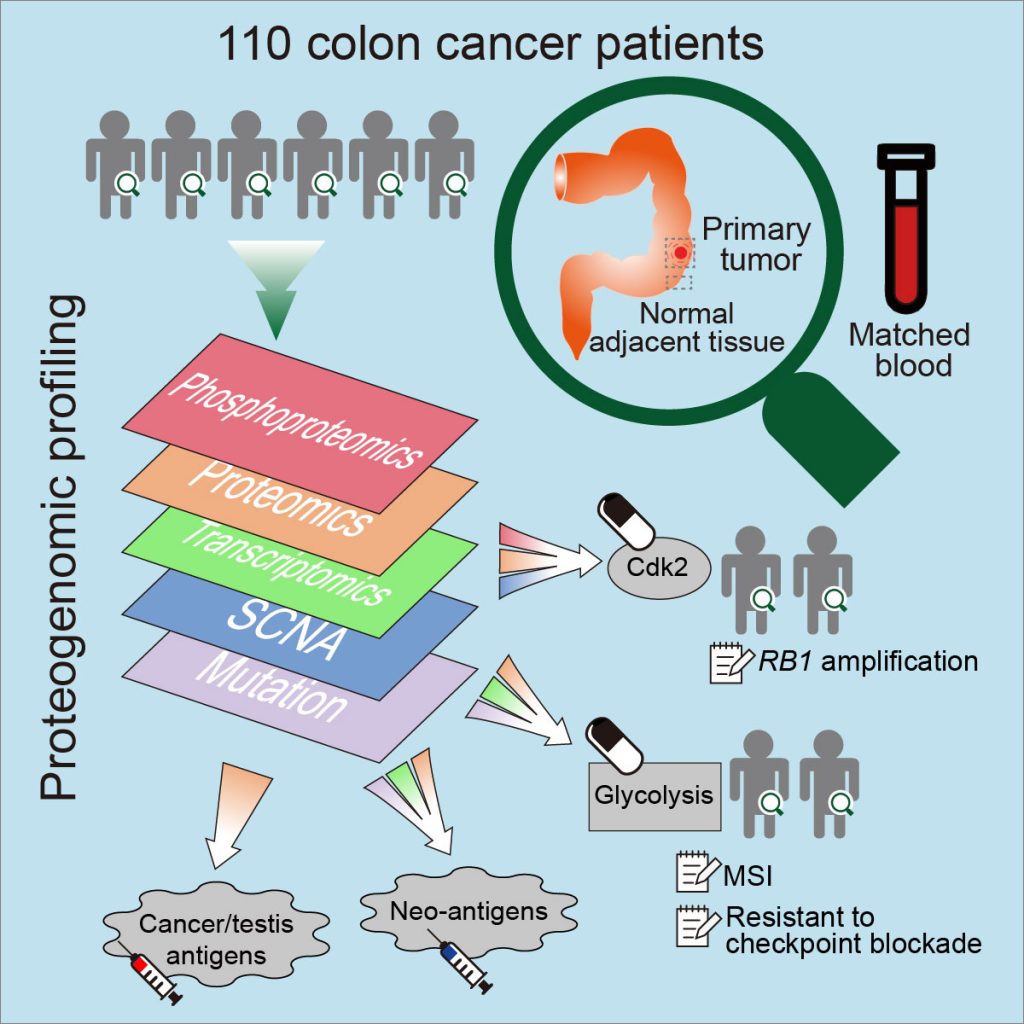
 The CPTAC study Proteogenomic Analysis of Human Colon Cancer Reveals New Therapeutic Opportunities has been published in Cell. This is an extension of the 2014 CPTAC colorectal cancer study. In addition to confirming the value of proteogenomic integration in uncovering novel cancer biology, this new study further demonstrated the utility of proteogenomics in therapeutic hypothesis generation. For example, phosphoproteomics data associated Rb phosphorylation with increased proliferation and decreased apoptosis in colon cancer, which explains why this classical tumor suppressor is amplified in colon tumors and suggests a rationale for targeting Rb phosphorylation in colon cancer. As another example, proteomics identified an association between decreased CD8 T cell infiltration and increased glycolysis in microsatellite instability-high (MSI-H) tumors, suggesting glycolysis as a potential target to overcome the resistance of MSI-H tumors to immune checkpoint blockade. The primary and processed datasets are available in publicly accessible data repositories and portals (e.g., LinkedOmics), which we hope will allow new biological discoveries and therapeutic hypothesis generation.
News Story